
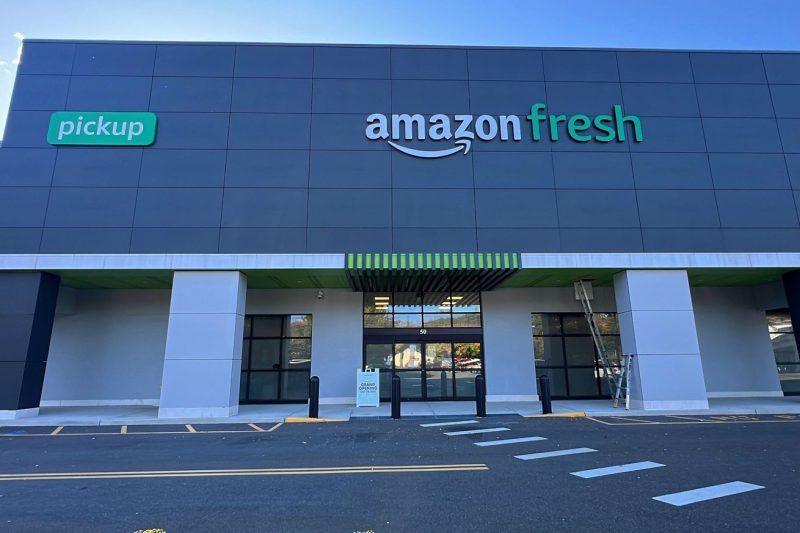
Amazon Explores Blend and Match Experiment in Grocery Operations
Amazon Tests Mixing and Matching Its Grocery Operations
In a bold move to enhance its grocery business, Amazon has recently begun testing a new approach that involves mixing and matching its grocery operations. This innovative strategy marks yet another disruptive move by the retail giant as it continues to revolutionize the way consumers shop for groceries.
Traditionally, grocery operations have been divided into two distinct categories: perishable and non-perishable. However, Amazon’s new approach challenges this conventional wisdom by blurring the lines between the two categories. By mixing and matching perishable and non-perishable items throughout its fulfillment centers, Amazon aims to streamline its operations, improve efficiency, and ultimately deliver a better experience for its customers.
One of the key benefits of this new approach is the increased flexibility and agility it provides Amazon in managing its inventory. By breaking down the barriers between perishable and non-perishable items, Amazon can optimize its warehouse space more effectively and respond more quickly to fluctuations in demand. This increased flexibility allows Amazon to better meet customer expectations for fast and reliable grocery delivery.
Additionally, mixing and matching perishable and non-perishable items can also lead to cost savings for Amazon. By consolidating its grocery operations and eliminating redundancies in its supply chain, Amazon can reduce waste, lower transportation costs, and achieve greater economies of scale. These cost savings can then be passed on to customers in the form of lower prices, further solidifying Amazon’s position as a leader in the competitive grocery market.
Furthermore, the mixing and matching of perishable and non-perishable items can also help Amazon drive innovation and foster creativity within its grocery business. By encouraging cross-functional collaboration and breaking down silos between different departments, Amazon can leverage the diverse expertise of its team members to develop new and exciting products and services that meet the evolving needs of consumers.
While Amazon’s new approach to mixing and matching its grocery operations may represent a significant departure from traditional industry practices, it is a clear demonstration of the company’s commitment to continuous improvement and innovation. By challenging the status quo and embracing new ideas, Amazon is positioning itself for long-term success in the rapidly changing grocery landscape.
In conclusion, Amazon’s decision to test mixing and matching its grocery operations is a bold and strategic move that has the potential to revolutionize the way customers shop for groceries. By breaking down the barriers between perishable and non-perishable items, Amazon can increase flexibility, drive cost savings, foster innovation, and ultimately deliver a better experience for its customers. As Amazon continues to push the boundaries of what is possible in the grocery industry, it is clear that the retail giant remains at the forefront of innovation and disruption.