
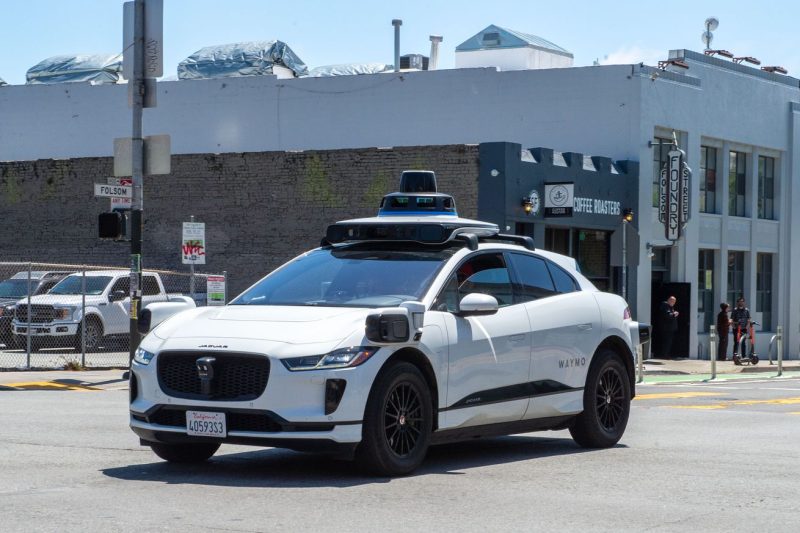
Highway Surprise: Police Stop Self-Driving Waymo Car in Wrong Lane!
In a recent incident that raises questions about the safety and regulations of autonomous vehicles, a Waymo self-driving car was pulled over by the police for reportedly driving in the oncoming lane. The incident occurred on a busy street in California, where the Waymo vehicle was observed crossing a double yellow line into the lane designated for oncoming traffic.
This unusual encounter between law enforcement and a self-driving car highlights the ongoing challenges and complexities associated with the integration of autonomous vehicles into existing transportation systems. While self-driving technology holds promise in improving road safety and efficiency, incidents like this serve as stark reminders of the need for robust oversight and regulatory frameworks to ensure the safe deployment of autonomous vehicles on public roads.
The Waymo vehicle involved in the incident was part of the company’s fleet of self-driving cars that are undergoing testing on public roads. Waymo, a subsidiary of Alphabet Inc., has been at the forefront of developing autonomous driving technology and has conducted extensive testing to refine its software and hardware systems. The company’s goal is to make transportation safer and more accessible through the deployment of self-driving vehicles.
However, the incident of the Waymo car driving in the wrong lane raises questions about the readiness of autonomous vehicles to navigate complex and dynamic traffic conditions. While self-driving cars rely on sensors, cameras, and artificial intelligence algorithms to interpret their surroundings and make driving decisions, unexpected scenarios or errors in programming can still occur, leading to potentially dangerous situations.
The response of law enforcement in pulling over the Waymo vehicle underscores the need for clear guidelines and protocols for interactions between autonomous vehicles and human drivers or authorities. Given the novelty of self-driving technology and its implications for road safety, policymakers and regulatory bodies must develop comprehensive frameworks to govern the testing and deployment of autonomous vehicles on public roads.
Moreover, incidents like the one involving the Waymo car serve as valuable learning opportunities for the autonomous driving industry to improve the safety and reliability of self-driving systems. By analyzing the factors that led to the vehicle driving in the wrong lane and implementing corrective measures, companies like Waymo can enhance the performance of their autonomous vehicles and mitigate the risks of similar incidents in the future.
In conclusion, the incident of a Waymo self-driving car being pulled over for driving in the oncoming lane sheds light on the challenges and responsibilities associated with the development and deployment of autonomous vehicles. While self-driving technology has the potential to revolutionize transportation and enhance road safety, incidents like this underscore the importance of rigorous oversight, continuous improvement, and collaboration between industry stakeholders, regulators, and law enforcement to ensure the safe integration of autonomous vehicles into our roadways.